Building Pathology: Equipment for Damp Surveys
If your only tool is a hammer, every problem will look like a nail. This is very true when it comes to dampness inspections as the right tools and the right amount of knowledge and understanding is key to allowing maintenance staff to successfully determine the cause of dampness issues within properties. In this blog I will be putting across my view that staff within housing associations and local authorities, with the right training and equipment, can successfully complete good quality initial dampness inspections.
Dampness in buildings is one of the most common call outs from tenants that require a maintenance inspection. It can have a variety of negative effects on occupants and the building itself, some of the effects on the building can include:
- Mould development
- Decorative staining
- Increased likelihood of fungal or insect attack to timber
- Damage or disintegration to masonry walling
- Loss of insulation quality
- Physical damage (expansion or contraction movement)
- Transportation of salts
- Corrosion of fixings or supports
Ventilation specialists, building surveyors and dampness specialists can provide assistance for complex cases but in my view for the majority of cases the inspection can be completed by the social landlord / local authority maintenance staff.
There are various bits of kit out there that can assist maintenance staff in investigating dampness such as borendosopes, thermographic cameras, calcium carbide meters, data loggers and floor hygrometers. These items all serve their respective purposes but in most cases a moisture meter and data loggers will be the most frequently used pieces of kit.
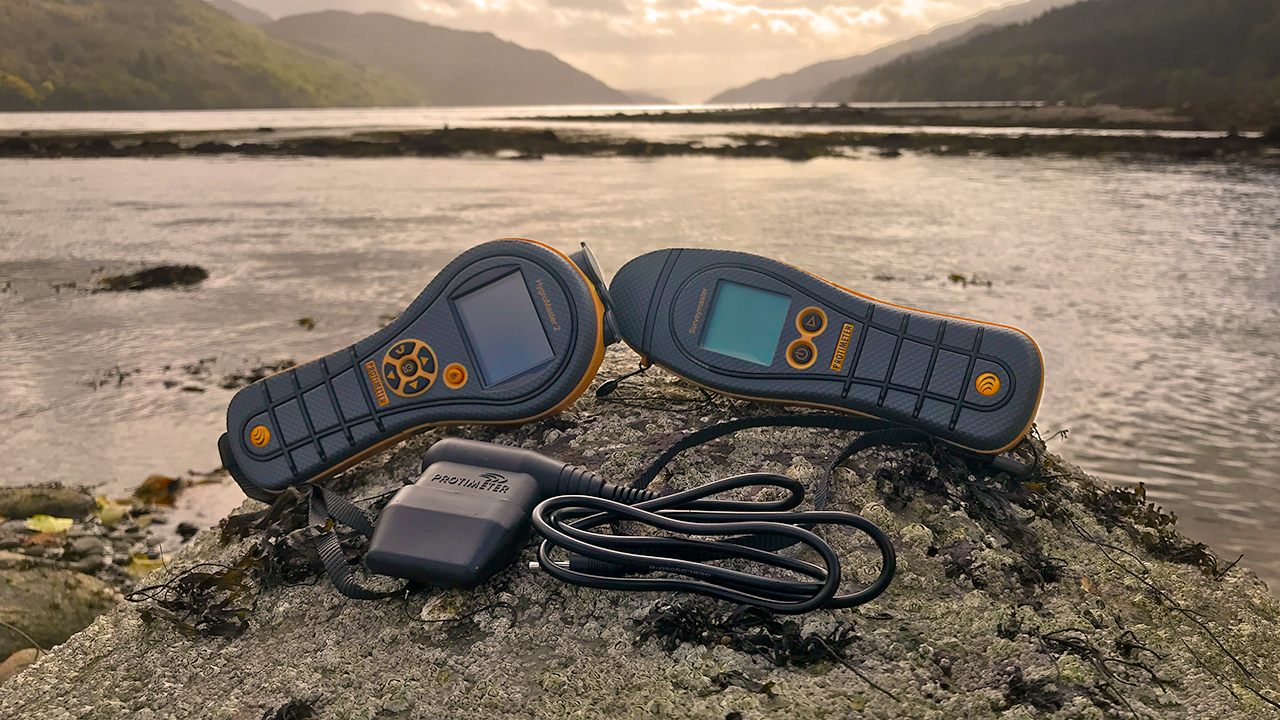
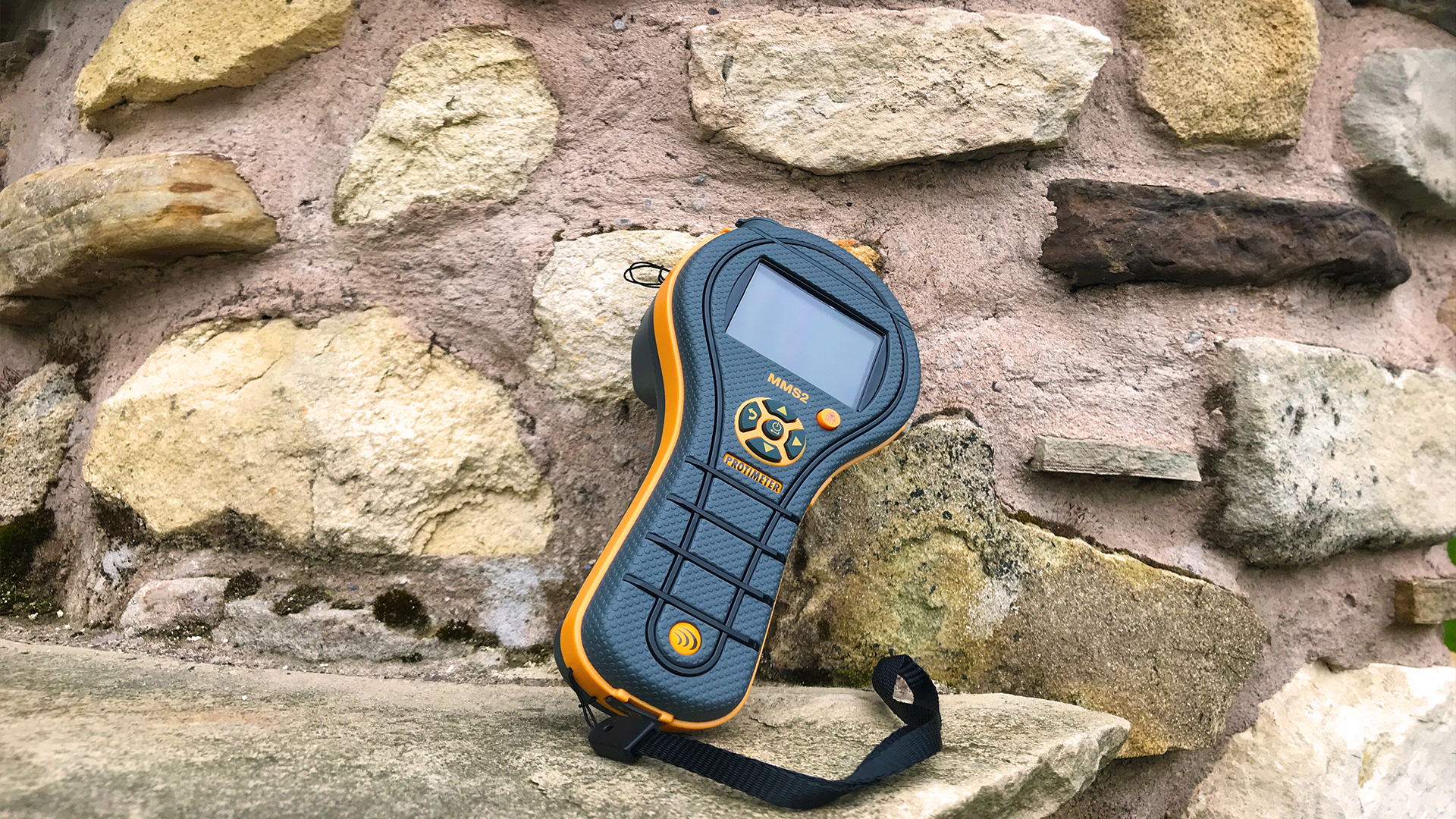
The Protimeter MMS3
There are many dampness meters on the market with the Protimeter being one of the best for moisture analysis. The MMS3 is an well rounded meter which employs a full range of building moisture diagnostics. It features the standard pin moisture measurement but also boasts many other impressive features such as:- Non-invasive moisture measurement
- Hygrometer
- Non-contact IR thermometer
- Datalogging
- Other attachments like deep wall probes and hammer pin instrument
How do they work?
Electrical resistance meters work by using the two pinned probes to measure the electrical current resistance. Wood has a high electrical resistance when dry but decreases when wet, so this allows the meter to detect this difference and display a moisture reading.The non-invasive moisture measurement works by sending a specific radio frequency through the material being observed. Moisture is determined by measuring the change in the radio signal.
The IR thermometer works by determining the temperature via the infrared radiation emitted. The IR thermometer will have a detector called a thermopile which converts IR to heat, the heat is converted into electricity which is measured and the value is displayed on the device. You can learn more about IR in my blog post ‘Understanding Thermography’.
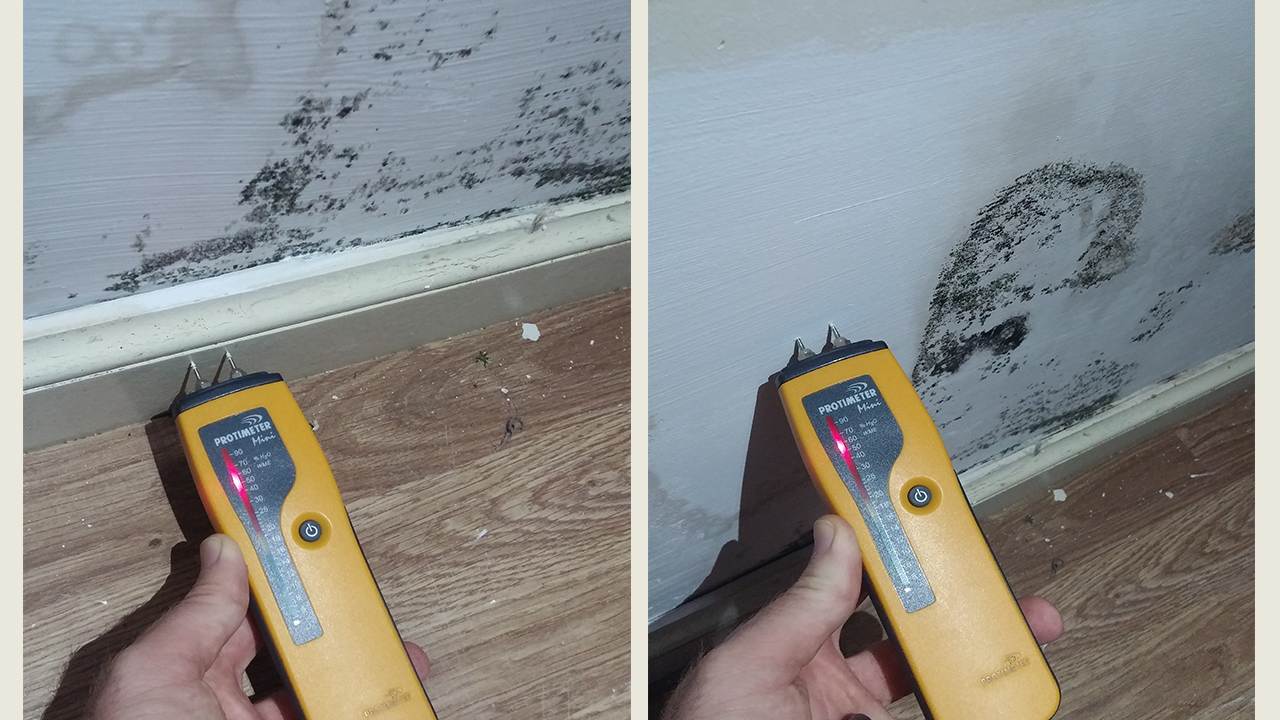
Knowing the limitations of the equipment you use is important as well. Electrical moisture meters are calibrated for wood so it will give you a wood moisture equivalent reading (WME) for other building materials. This means in masonry you should use electrical moisture meters as ‘dry meters’ or an indicator of potential damp rather than a definitive reading. False high readings can be obtained from:
- Carbonaceous material
- Buried electrical cables
- Foil backed wall paper
- Salts
- Timber 20 - 22%
- Plaster above 1%
- Mortar above 1%
- Brick above 1%
- solid floor above 80% RH
Data loggers
Data loggers can be used on a long term basis for property monitoring or shorter term for condensation assessments. They allow you to gain a better understanding of the heating, ventilation and relative humidity in the property and allow you to give specific tenant advice based on the actual data procured. They are my secondary go-to piece of kit if the evidence is leaning towards condensation as being the source of the moisture problem.Using data loggers in a property for around three weeks will allow you to build a picture of the internal conditions within the property. Air above 70% relative humidity is considered damp because that is the point in which mould growth can occur, so this is the threshold you are looking out for when analysing the data. Its also worth keeping in mind that wall temperatures will be lower than air temperatures so the local relative humidity will be higher, how higher will depend on the type of wall, older buildings may have a bigger temperature differential. This is where a thermal camera or temperature readings will be useful to help build up a fuller picture when carrying out an extensive survey.
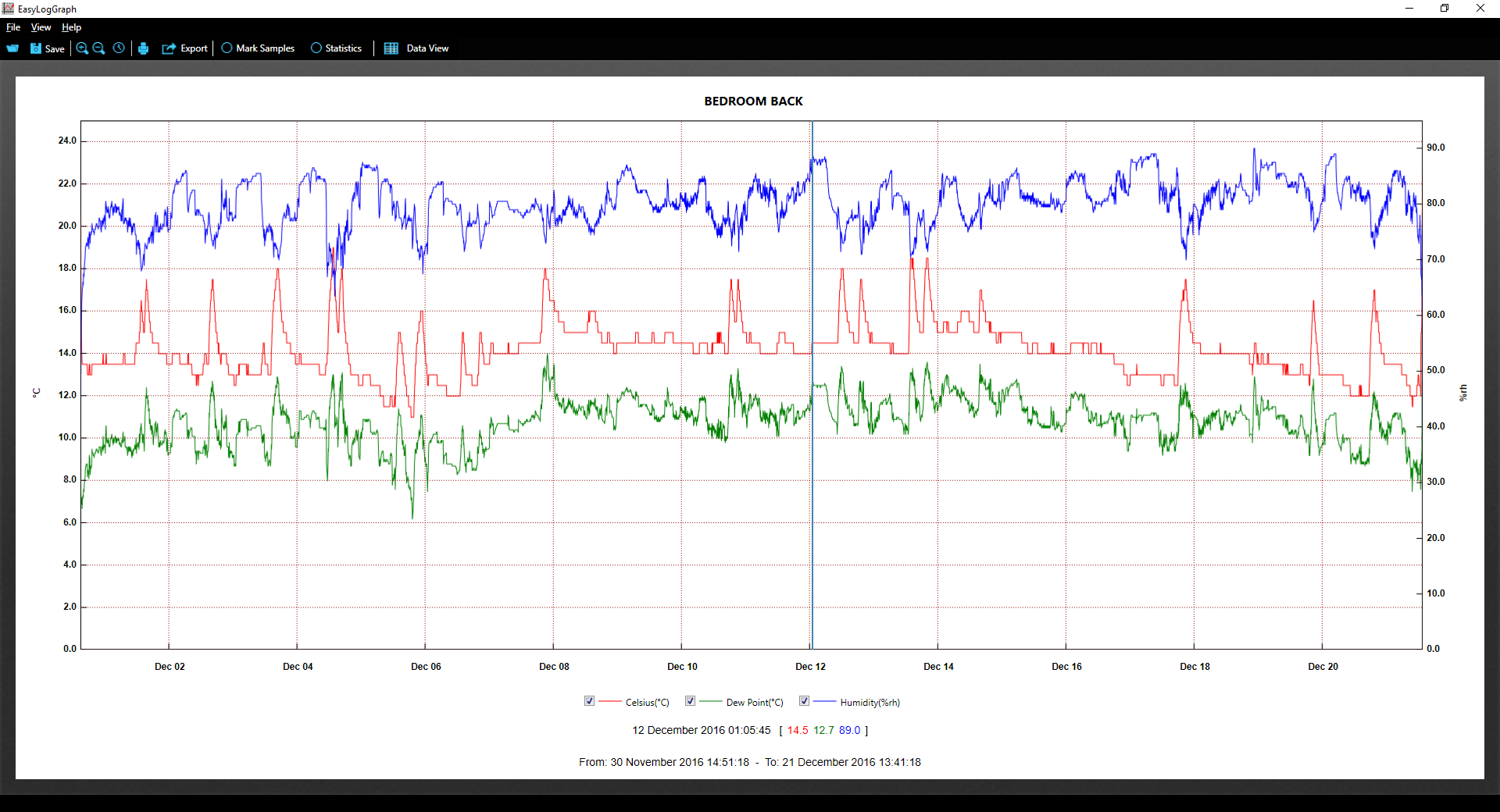
I tend to use filesthrutheair USB data loggers for condensation assessments but there are lots of options out there such as the Protimeter BLE meters or for longer term monitoring the AICO environmental sensors. The realm of environmental sensors are really opening up and more products are coming to the market all the time.
Mould
When carrying out a condensation assessment and talking about using data loggers, its worth knowing a little bit about Mould. Mould is part of the fungi kingdom. Fungi in buildings is called ‘Building Mycology’. Examples of fungi in buildings would be Moulds, Rots, Mildew, yeasts and Litchens.There are thousands of mould species. In a flood damage building you may have hundreds of mould species growing at the same time. These come in a variety of colours, greens, greys, blacks, browns, reds, pinks. Mould spores are invisible to the naked eye, the way they develop is a spore will land on a surface and if the conditions are right for it to grow it will germinate and grow outwards from that central point to form a colony. Some mould can be toxic. Mould will have a root network, storks and spores, however, different species will look very different under the microscope. Mould from flood damage will be different than condensation moulds. Some common moulds include; cladosporium, aspergillus, penicillum and stachybotrys. Mould requires the following conditions to grow:
- They need organic matter for food - Wallpaper, hardboard, dirt, fabrics.
- Water – Moulds are hydroscopic so can draw water from the air. They need moisture to draw from to thrive.
- Reasonable temperature (say 15 to 30 centigrade optimal) The warmer the better, humid warm properties are the worst.
- Low light – Moulds are photophobic so they are sensitive to light. Moulds don’t photosynthesise. In the dark mould colonies can increase 3-10x, the average colony in the dark will be 6x larger.
- A rough surface – if it’s too smooth they will struggle to get purchase.
- Oxygen
- Reasonable PH (say 2 to 9)
Cost Effective Solution
Training staff in house and procuring the right kit like the Protimeter MMS3 will have many benefits and will save your organisation in expensive dampness inspections or implementing unnecessary repairs. I would personally endorse the Scottish Lime Centre Trusts 'Damp in Buildings - Online Masterclass' presented by the one and only Mike Parrett as an excellent place to start if looking for good training, however at the time of writing this blog there doesnt look like there are any dates for this course scheduled.Another good free resource is the likes of youtube videos, there is a wealth of great information out there now in video format or if you prefer written content then this very blog is the place to be (although I would never claim to know everything, every day is a school day).
I am a huge proponent of CPD and training and with maintenance staff’s existing extensive knowledge of their stock along with good dampness training they are more than equipped to carry out a great initial survey.
Investing in quality equipment will also increase the likelihood of a first time resolution which will foster more confidence from tenants and increase overall tenant satisfaction. Maintenance officers and property officers can effectively carry out dampness surveys if given the right training, equipment and support.
Assistance from specialists is sometimes necessary and knowing your own personal limitations is important but an over reliance on third party surveyors who may have an incentive to sell you a product is not the best way forward.
Thanks for reading this blog, if you enjoyed it feel free to subscribe via email to get the most up to date blog posts.