Can AI Triage Damp? Useful, but Keep a Human on the Safety Calls
AI is turning up everywhere in housing maintenance at the moment. This month’s Homes UK conference has a session called Predict before you repair: Using data and AI to transform maintenance. I went looking for detail on the tool behind it and couldn’t find much, but it’s a topic that interests me deeply.
So rather than write about someone else’s tool, I want to share how I’ve been using AI myself, what it’s good at, and where I think the line has to be drawn.
The problem
Since 6 October, Scottish landlords have had to get a competent person to investigate damp and mould within 10 working days, then issue a written summary to the tenant within 3 working days of the investigation concluding. Anyone who has done a damp inspection knows the visit is only half the job. The write-up, the form, the summary and the logger data all take time, and every hour spent typing at a desk is an hour not spent in someone’s home.
Then there’s the front end. Every report has to be triaged, and with the new clocks running, getting that first sort right matters more than ever. Housing associations, my organisation included, are looking at an AI repairs-triage tool for the tenant portal. If that doesn’t work out, the fallback being looked at is a photo-based diagnosis tool. None of this is decided yet, but it shows where the sector is heading.
It isn’t just a UK thing either. South Korea’s national public housing body receives around 300,000 defect complaints a month, and has been building a system that classifies defect photos (cracks, leaks, mould and so on) automatically, so customer service staff can focus on the complaints that need judgement.
Here’s what I’ve been doing at my own level.
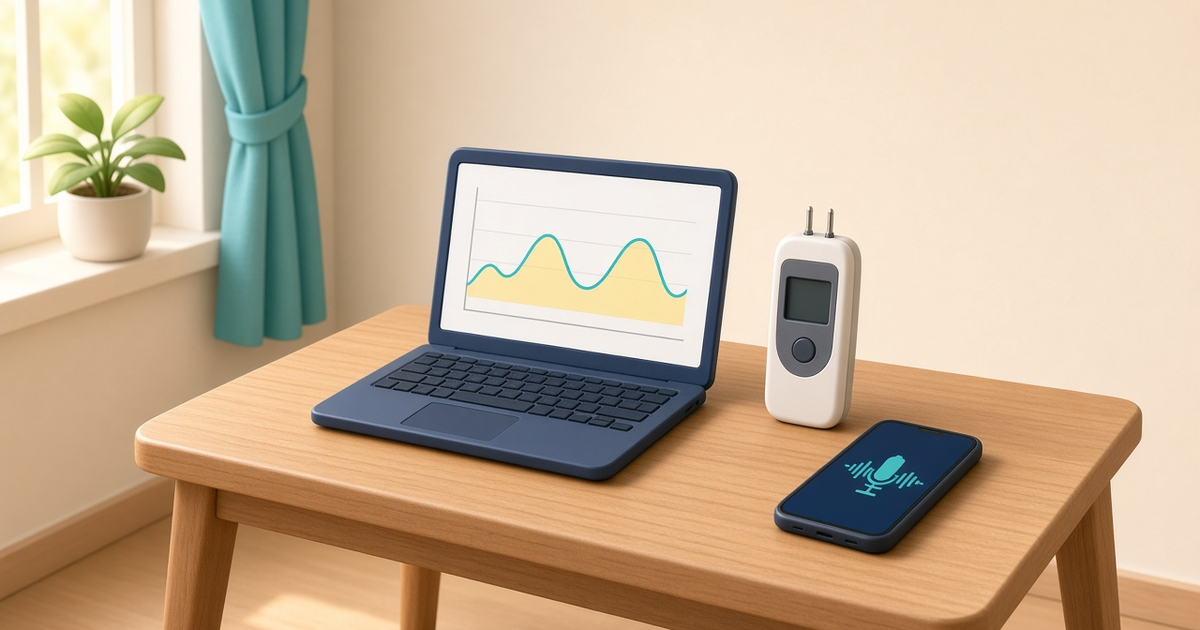
Voice to form. I’ve been trialling a workflow on damp inspections where I speak into my phone, using a prompt sheet as a structure so I cover the same ground every time. AI then takes my script, fills in the DMC (damp, mould and condensation) inspection form and the written summary, and emails me the completed forms. I don’t include addresses, tenant details or anything else that could identify the household. I add those afterwards. It speeds up my workflow massively.
The data-logger tool. I’ve also built a tool where you drag and drop the .txt files from a data logger and it plots the humidity graphs and gives you insights from the data. Then you hit a create report button and it produces a report that brings all of that information together. I’ll be honest: I could never in my wildest dreams have coded something like this myself. I knew exactly what I wanted to build, but I didn’t have the coding skills to develop it. That’s where AI came in. If you read my DIY smart damp and mould monitoring post, you’ll know I’ve been thinking about how housing providers can do more of this themselves rather than paying big fees, and this is part of the same thinking.
Where it can go wrong
None of this means AI should be left to get on with it. There are three places I think it can go wrong.
Over-trusting the output. AI writes confidently, and a well-formatted form looks finished whether or not it’s right. When my forms come back, I read them properly before anything goes anywhere. If it has misheard a reading, mixed up two rooms or filled a gap with something I didn’t say, that’s on me if I sign it off. The same goes for logger reports: the graph is only as good as the data and where the logger was placed. A report that says “condensation risk” doesn’t tell you whether it’s a cold bridge, a lack of extract or a hidden leak. You still need to combine the findings with your on site observations to help you come to an educated decision.
Data protection. This is why I leave out identifying details and add them later. That’s my own practice, and I think it’s a sensible starting point. If you’re using AI as a personal tool you need to be very careful with what information you’re putting in, if your organisation is implementing it they will have considered such topics as GDPR. If you’re thinking of trying something similar, speak to your organisation’s data protection lead first about which tools you can use and what can go into them. Know your limits applies here as much as it does on site.
Safety calls. This is the big one. Triage tools, whether they read text or photos, are making a call on how urgent something is. A photo of mould on a ceiling won’t tell you there’s a vulnerable tenant with a respiratory condition, human oversight remains essential.
In essence, I am in support of expanding AI’s role while keeping it on a short leash.
AI can speed up the admin and help sort the queue, but the diagnosis and the safety calls stay with the competent person. I’ve written before about who counts as a competent person under Scotland’s Awaab’s Law, and nothing about AI changes that. If anything, it makes it more important. A tool that gets the form written in minutes is no use if the diagnosis on it is wrong.
Conclusion
I think the most exciting part of all this isn’t the big corporate tools. It’s what individual practitioners can now do for themselves. Not long ago, an idea like my data-logger report tool would probably have stayed an idea, because I didn’t have the coding skills to build it. Now, if you know your job and you know what would make it easier, you can describe what you want and let AI do the coding.
So if you have an idea, the tools are now out there to bring it to life. Just keep a human in the loop. Let AI do the typing, the sorting and the number-crunching, and keep the diagnosis and the safety calls with the person who has actually stood in the room.
Further reading
- Homes UK 2026, Predict before you repair (conference session, 24 November 2026)
- Financial News (Korea), automated defect-photo classification at South Korea’s national public housing body, 2 November 2026
- Multi-Housing News, How AI is making multifamily maintenance more efficient, 4 November 2026
- Scottish Government, Awaab’s Law: guidance for landlords in Scotland
On this blog