Building Surveying: Conducting Damp Surveys

In this blog I will be discussing how I interpret data logger findings when undertaking a condensation survey based within a social housing context. The data loggers used in this example were Lascars EL-USB-2+.
Explaining to the tenant the scope of the survey is quite important as the data loggers will not give you all of the answers. The data gathered can however allow you to make certain assumptions on the heating and ventilation in the property.
Firstly before going into the results found its worth explaining what temperatures and humidity levels would be desirable.
Temperature
The World Health Organization made recommendations in a 1991 guidebook called 'Indoor Environment: Health Aspects of Air Quality, Thermal Environment, Light and Noise'. In this they state that the desired internal air temperatures should be between 18°C - 24°C for healthy adults. This would be increased to 20°C for vulnerable groups like the disabled, elderly and babies.They go on to write that temperatures below 16°C with high relative humidity can impose certain health risks from respiratory and arthritic diseases as well as reactions from the likes of moulds, dust mites and allergens from pets.
Temperatures below 12°C can become more of a health risk particularly to vulnerable groups. Below this temperature cardiovascular changes can be detected, especially in the elderly. At 6°C there is a risk of fatal hypothermia which would be more prevalent in elderly people who are immobile.
Its worth knowing these baseline temperatures when analysing the results and giving advise to tenants. Its also worth while carrying out a data logging session on your own home so you can see what the results look like under a controlled environment. For example the average temperature that I tested in my own house for a week in March was 19.8°C with an average humidity of 52.3%RH.
Humidity
The amount of water that air can hold or contain depends on its temperature. Relative humidity is the percentage of moisture in the air relative to its temperature at that time. Warm air can hold more moisture than cold air, so in the simplest terms if the property is heated adequately the likelihood of condensation drops dramatically. Dew point is the temperature at which the moisture in the air reaches saturation and condenses into water.So for an example if the temperature was 15⁰C and the relative humidity was 70% then the dew point for this amount of moisture is 10⁰C. So any surface which is 10⁰C or less condensation will occur. The Protimeter MMS2 and the Protimeter Hygromaster 2 can carry out condensation risk assessments which carry out the calculations for you and give you a immediate indication of whether there is a risk of condensation. The relative humidity as a reading in of itself means nothing unless you are linking it with the temperature.
That is good for the initial survey but a data logger survey will give a much better idea of the general conditions over an extended period of time. The percentage of humidity that I would be looking out for as a rule of thumb is 70% RH as generally speaking mould will begin to form at humidities above this level. Every property will have times where the humidity level goes above 70% but the key when analysing survey data is looking out for prolonged periods of high humidity. Normal peaks and flows are to be expected, however hours or a full days worth of high humidity will be a perfect breeding ground for mould to form.
Its worth keeping in mind that the humidity at the wall surface is always higher than what’s in the air because the surfaces are always colder, humidity as result can be 10% higher or more at the wall surface. This will be even more pronounced in historic or older thermally inefficient properties. This needs to be factored in when analysing data logger data.
Other Factors
When carrying out a condensation assessment there are many other contributory factors outwith heating and ventilation that need to be considered before deciding on what recommendations will be given for any particular situation. Some things to consider might include:- Construction type
- Building alterations
- Insulation
- Any defects which could be exacerbating the issue
- Overcrowding
- Tenant lifestyle including moisture generating appliances
- A cluttered house
- The amount of natural light
Analysing the Results
So we have a rough understanding of what the desired temperature should be and what humidity thresholds we are trying to stay under, we can now look at the data findings. We will take a look at the bathroom and bedroom findings from a recent survey.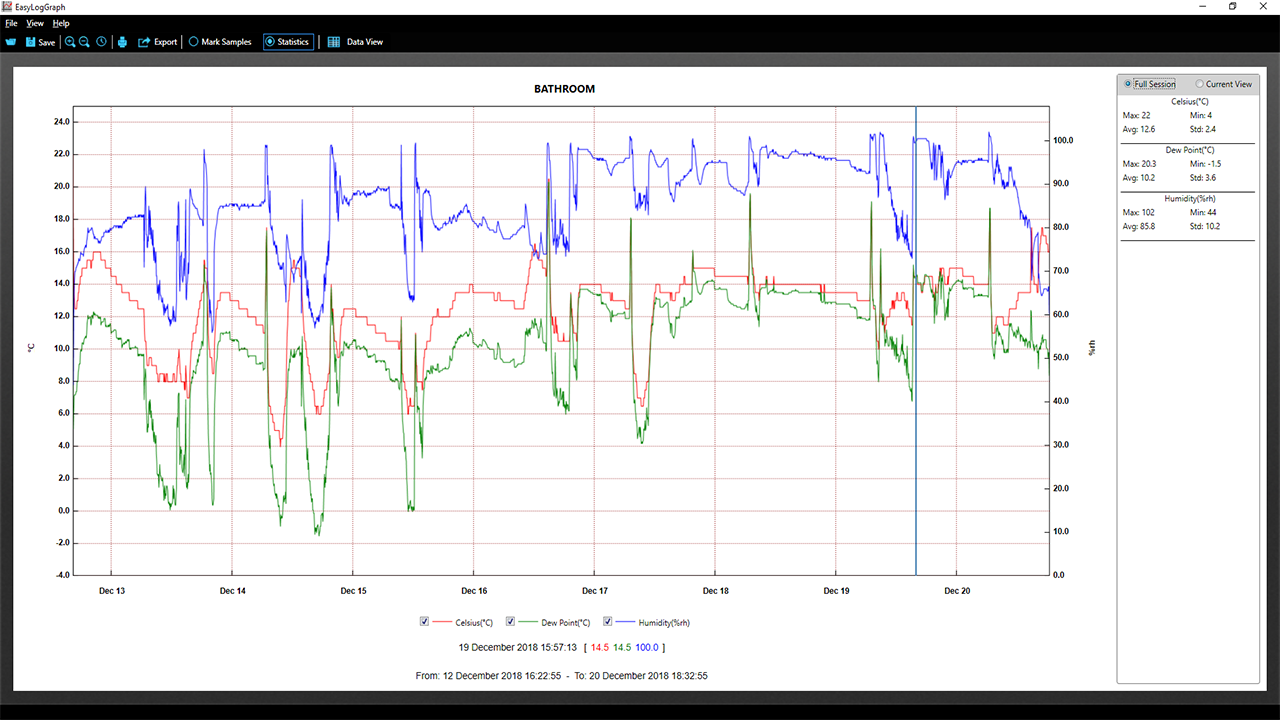
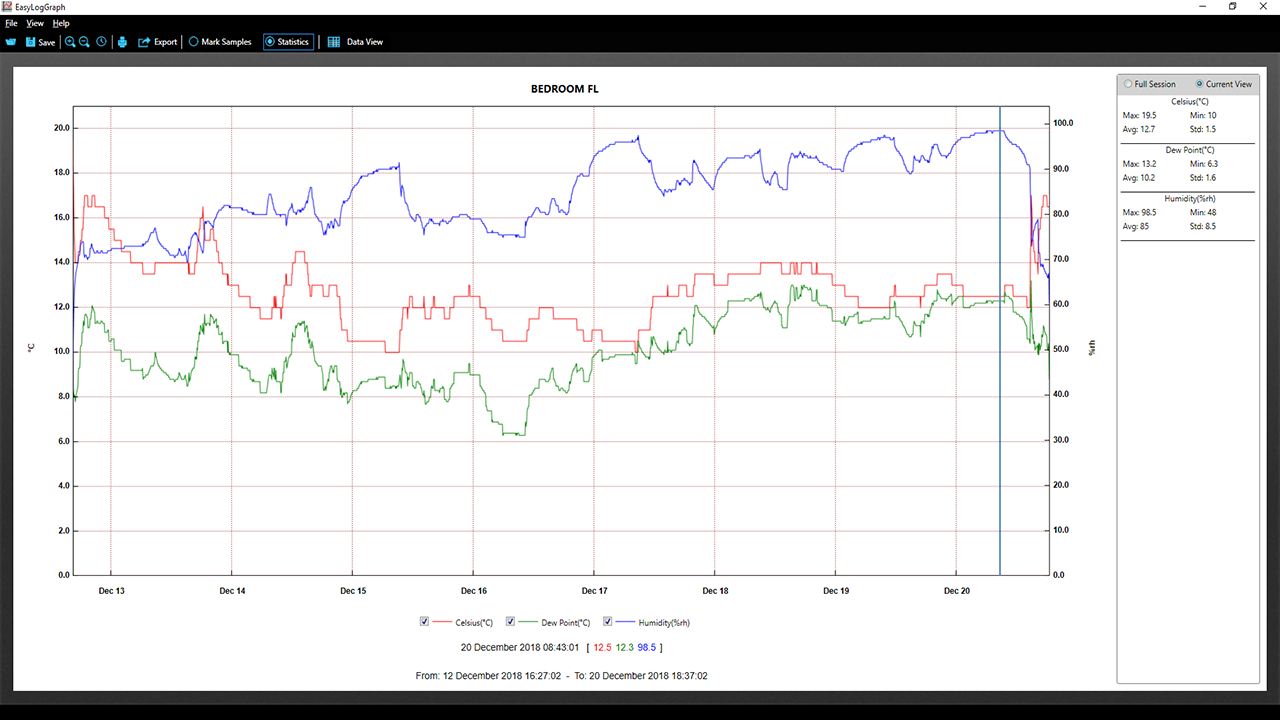
Looking at the data logger results you can see that the property is not being heated properly during the test period. Even taking into account the positioning of the data loggers the readings are very low. By heating the property to a higher level this would have a big impact on the condensation and mould growth in the property. Ventilation is always a big factor when there are sustained periods of high humidity however in this example if the heating was brought up to an appropriate level it would take the humidity back down to acceptable levels.
The average temperature in the bedroom is 12.7⁰C and the average humidity is 85%. When looking through the results, what I look out for are the spikes in humidity to see if they correlate with spikes in other areas of the house. This can narrow down where the focus should be aimed at.
Secondly I look at the general trends of heating and humidity. Valuable information could be gained from assessing how quickly the property is dropping in temperature compared to other samples. Looking at the heating patterns are important and will help tailor specific advice. The humidity trends will also give some information as to how ventilation working.
In the perfect scenario you would want to see the humidity sitting at comfortable levels with clear and short spikes at points where moisture generating activities are taking place. In bedrooms you should see more of a steady rise and fall of humidity, peaking at the early hours of the morning as the temperature drops.
You want to see a well heated property and also quite importantly a balanced heat throughout, not just certain rooms being heated. In the times we are in with high energy costs people are being told to reduce the temperature and only heat where needed, this is terrible advice when it comes to the risk of condensation. When heating is used intermittently and not enough heating is provided, the air might heat up but the walls won’t get a chance to heat up especially in older buildings with solid walls. A constant lower heat is better than bursts of higher heat.
Recommendations
The recommendations will be different for every case depending on what is found during the survey. Some common considerations and recommendations are usually as follows:- considering what planned improvements are due on the property and whether consideration needs to be made to bring these forward. Things like double glazing and replacing storage heaters can make a difference to the properties energy efficiency.
- Recommending that the tenant uses their heating system consistently. Keeping the property well heated. If the reason for not heating the property is fuel poverty then refer to benefits advisor who could provide further assistance.
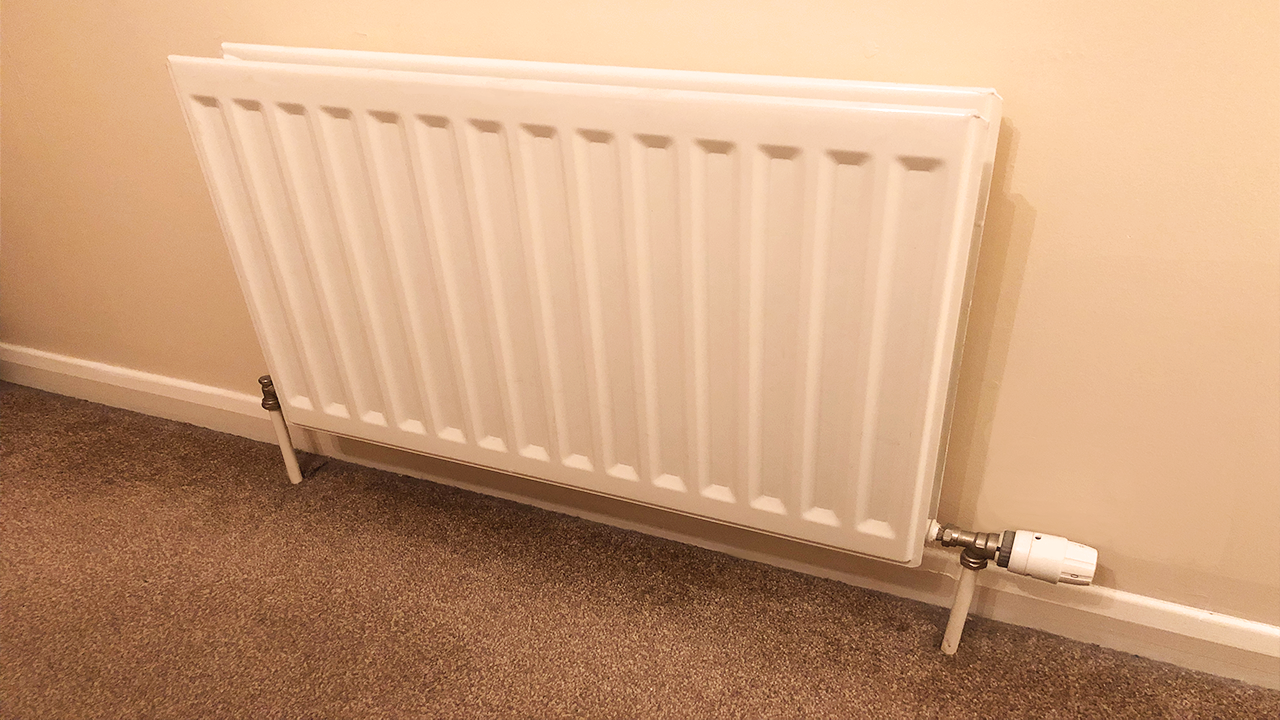
- Checking the heating and heating controls are working and ensuring that radiators are adequately sized for the room.
- Ensuring the tenant knows how to use the heating and if not to organise a heating demo (some heating controls can be quite complicated).
- Ensure the radiators are not being covered over or blocked by furniture.
- If using a tumble drier ensure room is well ventilated before / during / after use.
- Keep the kitchen and bathroom doors closed at all times during cooking and washing.
- If there is no extractor fan present, consider fitting a mechanical extract fan.
- Making sure the extract fans are in working order, serviced and cleaned out. If they are undersized or faulty then a continuous running vent with humidistat might be the best option.
- Ensuring loft insulation is topped up and property is well insulated. Reference could be made to the EESSH standards in Scotland to see if upgrades are required. If the insulative properties are a concern a thermographic survey might be something worth considering.
- If the property is overcrowded the tenant could liaise with the housing tenancy team.
- Giving advice on activities which generate high amounts of moisture. Is there a big fish tank in the lounge? are the radiators all covered in wet clothing?

There is allot of information that I have not covered in this blog but hopefully this gives a good basic understanding of some of the steps taken when conducting a condensation survey.
To learn more about some of the tools you might decide to use during a condensation survey check out the links below: